

2026 Chevrolet Blazer EV vs 2026 Honda Passport Which SUV Fits Your Lifestyle
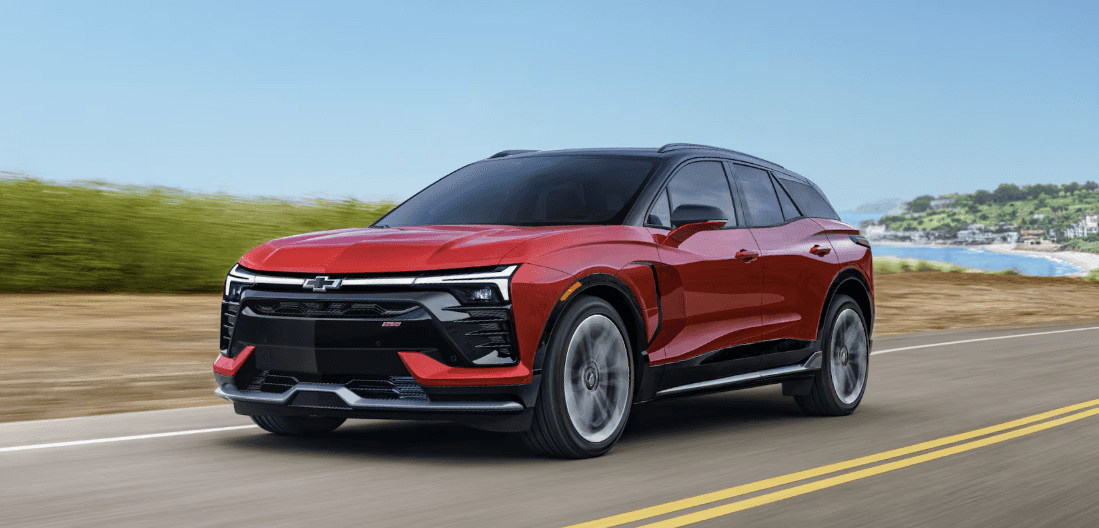
Two new midsize SUV designs arrive for 2026, and your choice between them might totally transform how you drive. The newly rebuilt Honda Passport packs serious off-road credentials, while the fresh Chevrolet Blazer EV brings electric power to family transportation. Our deep dive into the 2026 Chevrolet Blazer EV vs. Honda Passport will help you pick the right ride for your Woodlawn lifestyle, whether you’re just cruising through town or hitting those gorgeous Blue Ridge Mountain trails.
Overview and Key Changes for 2026
The 2026 Passport gets a complete redesign focused on off-road capability. The new model adds 242 pounds in weight, slowing its 0-to-60 mph time to 7.3 seconds while stretching the wheelbase 2.7 inches for more family space and smoother rides.
Chevrolet’s 2026 Blazer EV lineup streamlines with fewer powertrains, dropping the rear-wheel-drive RS trim entirely. This emphasis on all-wheel-drive (AWD) setups fits Virginia’s weather conditions. The electric SUV still delivers sports car performance numbers.
Pricing and Trim Levels Comparison
Honda offers the 2026 Passport in seven trims: the RTL ($44,750), RTL Towing ($45,450), RTL Blackout ($45,950), TrailSport ($48,450), TrailSport Blackout ($49,650), TrailSport Elite ($52,450), and TrailSport Elite Blackout ($53,650). The starting price increases from the 2025 Passport’s $42,400 but includes more standard features. Honda divides the lineup between RTL comfort models and TrailSport adventure versions.
Chevrolet structures the 2026 Blazer EV in three main trims: the LT ($44,600), RS ($50,400), and SS ($60,600). Base models match the Passport’s pricing, but the SS trim commands a premium.
Powertrain and Performance Analysis
Let’s take a look at the Chevrolet Blazer EV vs. Honda Passport specs. All 2026 Passports use the same 3.5-liter V-6 producing 285 horsepower and 262 lb-ft of torque. Honda pairs this with a new 10-speed automatic transmission (replacing the nine-speed one) and standard AWD. This proven combo delivers steady performance across driving conditions, with smoother shifting and better fuel economy for Woodlawn commuters.
Blazer EV performance varies dramatically by trim. The LT with front-wheel drive (FWD) makes 220 horsepower, while the RS trim offers 300 horsepower from combined motors with AWD and a 0-to-60 mph time of 6 seconds. The SS trim packs 615 horsepower and 650 lb-ft of torque from dual motors and speeds from 0 to 60 mph in 3.4 seconds. That’s supercar acceleration in SUV form.
The Passport comes standard with Honda’s i-VTM4 AWD system. The TrailSport models excel off-road with 8.3 inches of ground clearance, an off-road tuned suspension, all-terrain tires, seven drive modes, hill-descent control, front tow hooks, and engine/fuel tank skid plates. The Blazer EV comes with optional AWD (standard on the SS model), but it isn’t designed specifically for off-roading.
Fuel Economy and Range Comparison
The Passport RTL models get 19 mpg city, 25 mpg highway, and 21 mpg combined. TrailSport models with all-terrain tires achieve 18 mpg city, 23 mpg highway, and 20 mpg combined.
The Blazer EV with FWD can go up to 312 miles on a charge. AWD models use an 85 kWh battery pack and manage 283 miles of range. The SS trim gets a bigger 102 kWh battery pack and travels up to 302 miles between charges with EPA ratings of 92 MPGe city, 77 MPGe highway, and 85 MPGe combined. The Blazer EV can charge from 10% to 90% in 57 minutes on a DC fast charger.
Dimensions and Interior Space
The 2026 Passport measures 191.5 inches long, 79.4 inches wide, and 73.1 inches tall on a 113.6-inch wheelbase. It weighs between 4,478 and 4,705 pounds. The Blazer EV runs 192.2 inches (RS) to 192.7 inches (SS) long, 78 inches wide, and 64.8 inches (SS) to 65.1 inches (RS) tall with a 121.8-inch wheelbase.
The Passport offers 119.1 cubic feet for passengers vs. 107 cubic feet in the Blazer EV. Rear passengers get 40.7 inches of headroom and 40.9 inches of legroom in the Passport compared to 39.4 inches of headroom and 38.9 inches of legroom in the Blazer EV.
Cargo Capacity and Storage Solutions
Comparing the cargo capacity of the Blazer EV vs. Passport reveals a significant difference. The Passport offers 44 cubic feet behind the second row and 83.8 cubic feet with seats folded (6.1 cubic feet more than before). This handles outdoor gear for all your Virginia camping trips or family outings. The Blazer EV manages 25.5 cubic feet behind rear seats and 59.1 cubic feet total maximum, better suited to small families and regular commuters.
Towing Capabilities
The 2026 Passport can pull up to 5,000 pounds when properly equipped. That handles boats, camping trailers, or utility trailers for Virginia families. This capability comes from the Passport’s truck-inspired design and strong V-6 engine.
The 2026 Blazer EV maxes out at just 1,500 pounds towing capacity. Electric vehicles (EVs) generally can’t tow as much as gas models, and heavy loads can cut an EV’s range by up to 50%. This capability gap makes the Passport the clear choice for regular heavy hauling.
Technology and Infotainment Features
The 2026 Passport includes a 10.2-inch digital instrument panel, a 12.3-inch touch screen, nine speakers, wireless Apple CarPlay and Android Auto, Amazon Alexa, Google built-in compatibility, wireless phone charging, USB-C ports, and a Wi-Fi hot spot. The TrailSport Elite adds a 12-speaker Bose sound system.
The 2026 Blazer EV features larger screens, with an 11-inch digital instrument display and a 17.7-inch touch screen. You also get five USB ports, a Wi-Fi hot spot, six speakers, navigation, and satellite radio with Google built-in. However, it lacks Apple CarPlay or Android Auto, relying on Google Assistant for voice commands, vehicle functions, navigation, and media control.
Safety Features and Ratings
Both SUVs come packed with driver-assistance features. All 2026 Passports come standard with Honda Sensing safety tech, including forward collision warning, automatic emergency braking, pedestrian detection, lane departure warning, lane-keeping assist, adaptive cruise control, traffic sign recognition, blind-spot monitoring, rear cross-traffic alert, driver attention monitor, automatic high-beams, and parking sensors.
The 2026 Blazer EV includes automatic emergency braking, forward and reverse collision warning, pedestrian and cyclist detection, rear cross-traffic alert, intersection assist, rear parking sensors, blind-spot monitoring, high definition surround vision, automatic high-beams, adaptive cruise control, side cyclist alert, rear pedestrian detection, lane departure warning, and lane-keeping assist. It adds available Super Cruise hands-free driving mode, tire pressure warnings, and stability control. While the National Highway Traffic Safety Administration hasn’t rated the 2026 models yet, it gave the 2025 Blazer EV and Passport five-star overall safety ratings.
Which SUV Offers Better Value for Your Needs
Both SUVs are strong contenders. Your choice boils down to actual usage. The Passport suits Virginia outdoor enthusiasts needing boat/camper hauling, off-road ability, and plenty of space for gear. If you prefer cutting-edge tech, great performance, and lower running costs, the Blazer EV’s the SUV for you. Visit us at Johnson Family Chevrolet in Woodlawn, Virginia, to test-drive the 2026 Chevrolet Blazer EV and find your perfect match.
0 comment(s) so far on 2026 Chevrolet Blazer EV vs 2026 Honda Passport Which SUV Fits Your Lifestyle